Solution architecture & network planning
STCS solution architects bring deep multi-vendor expertise across every major technology domain — translating your program requirements into practical, buildable architectures that reduce risk at execution.
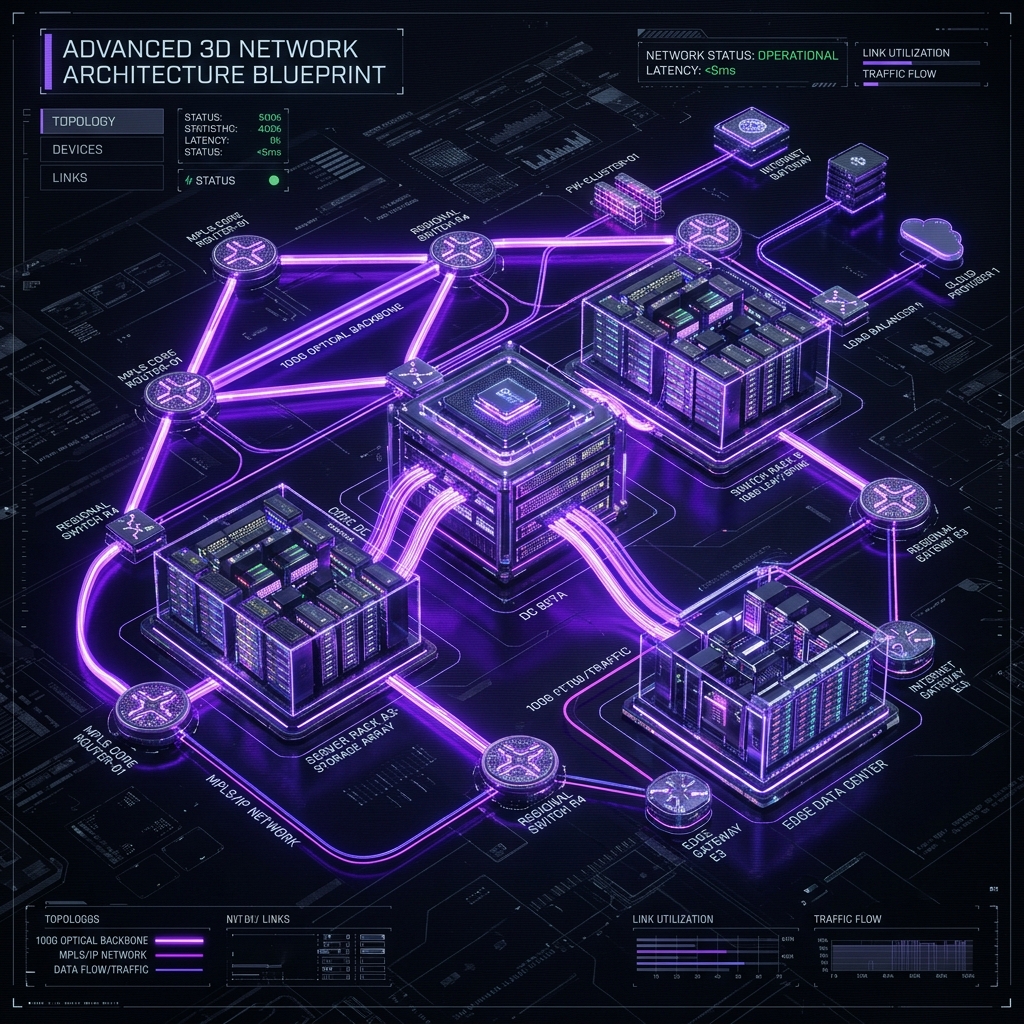
Solution Architecture
Multi-vendor network architecture across optical, IP/MPLS, data center, and subsea domains. Technology selection, reference designs, and program-level integration architecture.
Network Planning & Dimensioning
Capacity planning, link dimensioning, and topology design for backbone, metro, and access networks. Traffic modeling and long-term growth scenarios.
Link & Site Design
Detailed link design, OSNR budgeting, power level calculations, and site-level optical design. Route engineering and physical layer specifications for deployment teams.
Multi-vendor Integration Design
Cross-domain integration blueprints for programs spanning Nokia, Ciena, Cisco, Huawei, and emerging OEM platforms — ensuring interoperability before deployment begins.
Planning expertise by domain

Optical & Transport
DWDM system planning, optical link design, wavelength assignment, amplifier placement, and ROADM network topology — Nokia and Ciena platforms.
IP / MPLS & Routing
IP/MPLS network architecture, routing protocol design (BGP/OSPF/IS-IS), traffic engineering, and QoS policy design across Cisco, Nokia, and Huawei.
Data Center Networks
Data center fabric design, DCI architecture, spine-leaf topology, and interconnect planning for hyperscale and enterprise environments.
Submarine & Subsea
Subsea terminal architecture, landing station design, and integration planning for global cable systems — hyperscaler and carrier programs.
360° Project Management from day one
Planning without execution alignment creates re-work. STCS architects design with deployment realities in mind — our 360° PM framework ensures plans are buildable, testable, and operationally handover-ready from the first blueprint.

Deployment-ready blueprints
Every design deliverable is reviewed against deployment constraints — site access, equipment lead times, and staging requirements — before the project moves to build phase.
Reduced re-design cycles
Multi-vendor expertise means interoperability issues are resolved at design time, not during field commissioning — dramatically reducing costly mid-program changes.
Audit-ready documentation
All design outputs follow documentation-first standards — network diagrams, link calculations, BOQ/RFAI, and configuration templates that hand directly to deployment teams.
Designed for the OEMs you already use
Our architecture and engineering teams maintain deep multi-vendor certification across global tier-1 equipment manufacturers.